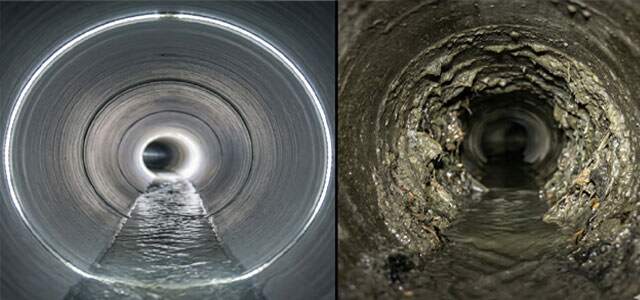
A clear guide to why drains run slowly, what it means and how to fix the problem properly.
Slow draining sinks, toilets and external drains are often an early warning sign that something is restricting flow within the system. While minor slowdowns can be caused by local build-up, persistent slow drainage usually indicates a developing blockage or structural issue.
If you’re looking for a general overview of slow drainage issues, see our guide to slow drains explained.
In many cases, the only reliable way to identify the true cause is with a professional
CCTV drain survey, allowing the internal condition of the pipework to be assessed before any repair work is carried out.
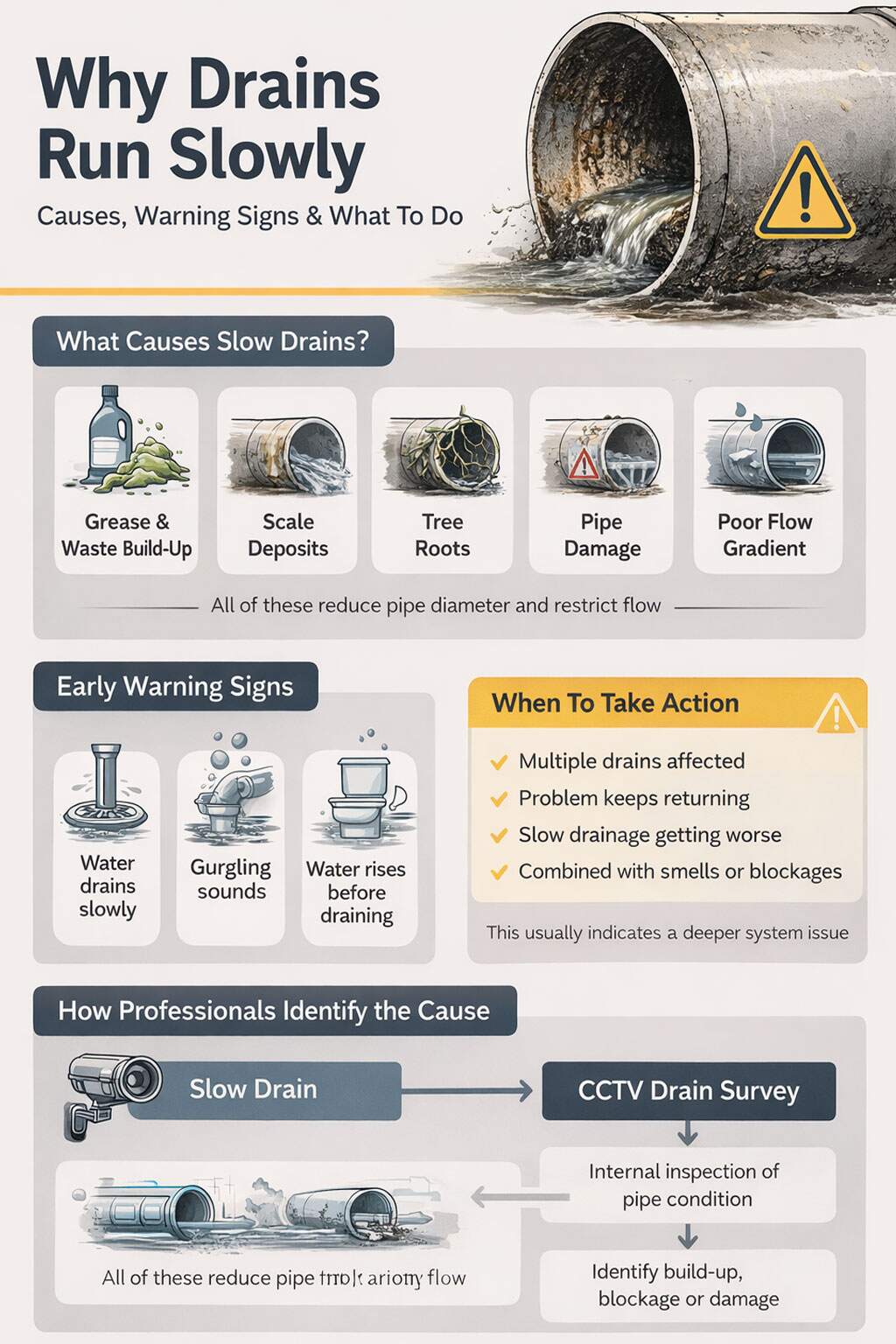
What Causes Slow Drains?
Slow drains occur when the flow of water is restricted somewhere within the drainage system. This restriction may be caused by partial blockages, internal build-up or structural defects that reduce the effective pipe diameter.
In some cases, the issue is localised and relatively minor. In others, it can indicate a developing problem deeper within the system that requires professional investigation.
Quick Answer
Slow drains are usually caused by partial blockages, internal build-up, scale deposits or structural defects that restrict the flow of wastewater through the pipe.
Common Reasons Drains Run Slowly
Partial Blockages
Waste materials such as grease, debris and organic matter can accumulate inside the pipe, restricting flow without causing a full blockage.
Scale Build-Up
Mineral deposits and internal residue reduce the internal diameter of the pipe, slowing down water flow over time.
Tree Root Ingress
Roots entering the pipe can catch debris and create restrictions that gradually reduce flow capacity.
Pipe Damage or Misalignment
Cracked, displaced or deformed pipes can disrupt flow and create areas where waste accumulates.
Poor Drainage Design or Fall
Incorrect gradients can prevent water from flowing efficiently, leading to recurring slow drainage.
Signs the Problem May Be More Serious
Important
- Slow drainage affecting multiple outlets
- Recurring slow flow after cleaning
- Gurgling noises from pipework
- Water levels rising before draining
- Combined issues such as smells or blockages
Why a CCTV Drain Survey Is Often Needed
The correct solution depends entirely on identifying the cause of the restriction.
In many cases, the only reliable way to identify the true cause is with a professional CCTV drain survey, which allows engineers to diagnose internal build-up, blockages and structural defects before recommending solutions such as drain lining repairs.
Professional Insight
Slow drains are often an early stage of a more serious problem. Identifying the issue early can prevent full blockages, system failure or costly excavation work later.
How Slow Drains Are Fixed
The right solution depends on what the inspection reveals.
- Build-up may be cleared through professional cleaning
- Partial blockages may require full system clearance
- Structural issues may require internal repair
- Flow issues may need system correction
If damage or deterioration is identified, modern solutions such as patch lining or drain lining systems can restore the pipe internally without excavation.
Why This Matters for Property Owners
Slow drains are often overlooked, but they are one of the clearest early indicators that the drainage system is not functioning correctly.
For homeowners, landlords and commercial site managers, early investigation can prevent recurring issues, reduce long-term costs and avoid more disruptive repair work.
Frequently Asked Questions
Why is my drain running slowly?
Slow drains are usually caused by partial blockages, internal build-up or structural issues restricting water flow.
Can a slow drain fix itself?
No. Slow drainage typically worsens over time as build-up increases or underlying issues develop further.
Do I need a CCTV drain survey?
If the problem persists or affects multiple drains, a CCTV survey is the most reliable way to identify the cause.
Can slow drains indicate pipe damage?
Yes. Cracks, displacement or root ingress can all restrict flow and cause slow drainage.
Need Help Identifying the Cause of Slow Drains?
Persistent slow drainage is often a sign that the system requires proper inspection.